Friday, June 21, 2013

US House rejects SNAP cuts


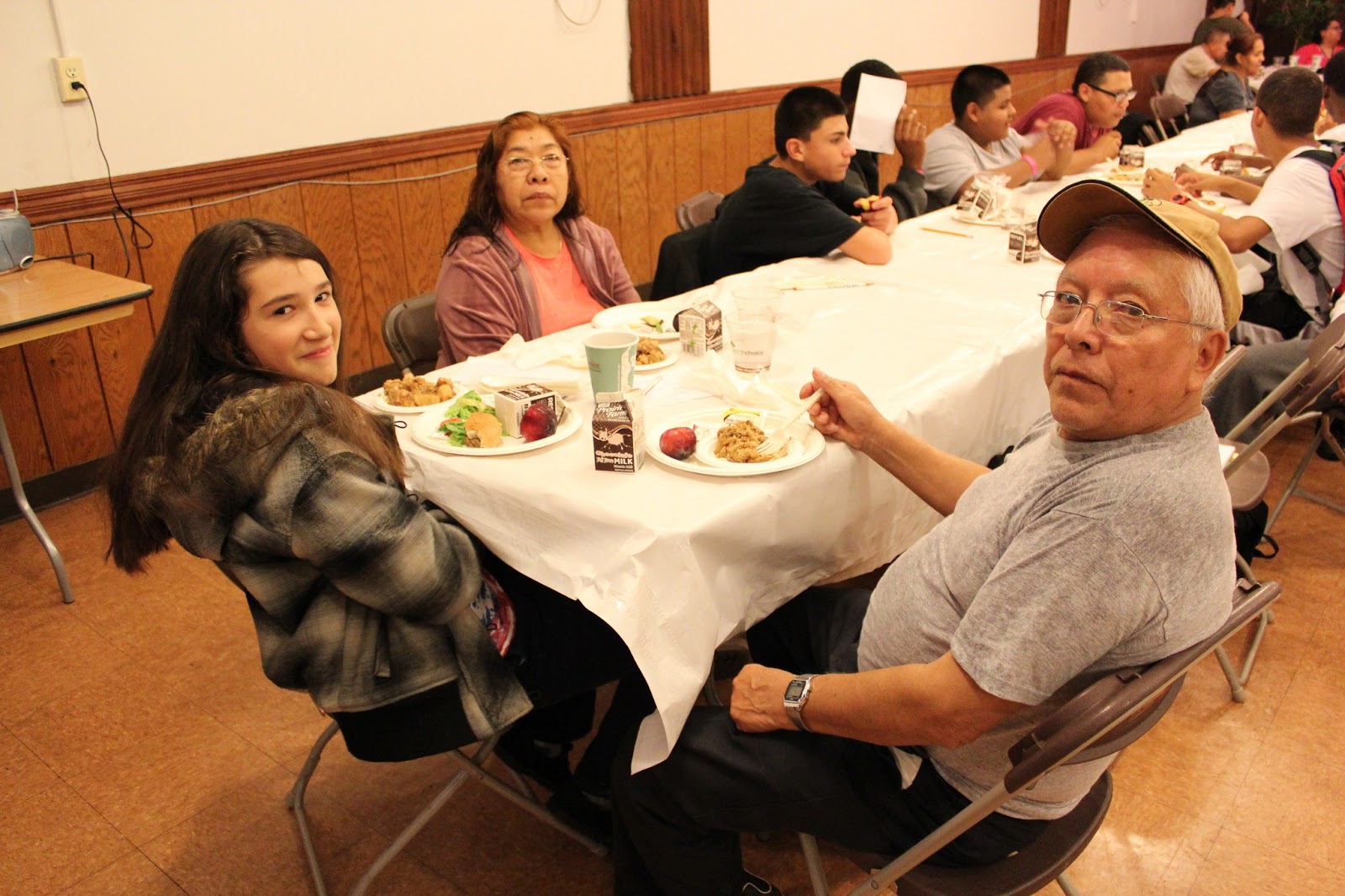
The Greater Chicago Food Depository's SNAP Outreach team helped 3,037 clients apply for SNAP benefits in Fiscal Year 2011-12.
By Doug Schenkelberg

The US House of Representatives voted June 20 to reject the proposed $20.5 billion in cuts to the Supplemental Nutrition Assistance Program (SNAP) by voting against the Farm Bill. As we laid out earlier this week, the Farm Bill, which sets federal policy for both agriculture and food and nutrition programs, was advancing to the floor of the House with several policy changes that would reduce benefits for thousands of food insecure households in Cook County. During the floor debate on the bill, several other amendments were added that would have further cut SNAP and other important food and nutrition programs.

Greater Chicago Food Depository advocates made a difference. All Cook County members of Congress voted to reject the cuts to SNAP and protect families facing food insecurity. They heard from their constituents that fighting hunger is important to them and they listened.

It is unclear at this time what the next steps for the Farm Bill will be. The current extension of the 2008 Farm Bill goes until September 30. Congress could choose to extend the 2008 Farm Bill again as they restart the process of writing a new Farm Bill, or they could regroup quickly and attempt to get a new bill completed before the deadline. We expect that the threat to critical nutrition programs has not gone away. We will continue to monitor these issues and work together to end hunger in our community.

Tuesday, June 18, 2013

How could the Farm Bill affect SNAP?


The Farm Bill threatens to cut up to $20.5 billion from SNAP. (Photo By Charlie Westerman/Greater Chicago Food Depository)
By Doug Schenkelberg, Greater Chicago Food Depository Vice President of Advocacy and Outreach

Right now, Congress is debating the Farm Bill, a piece of legislation that is critical to how our nation addresses the needs of families facing hunger. The Farm Bill is a federal act that sets policy and funding for two different areas. The first is agriculture. The second is the food and nutrition safety net. These two areas have been paired together since the creation of the Supplemental Nutrition Assistance Program (SNAP – formerly known as food stamps) was created in the 1960’s. As of 2011, there were more than 913,000 SNAP users in Cook County.

The House of Representatives’ version of the Farm Bill contains a steep cut to SNAP - $20.5 billion over 10 years. Their version eliminates a provision of SNAP referred to as “Categorical Eligibility.” Broadly speaking, this provision reduces red tape and simplifies access to needed programs for households facing food insecurity. In total, the reductions proposed in the House Farm Bill would cut 2 million individuals from the program nationally. The Senate's version of the bill includes $4.5 billion in SNAP cuts over 10 years.

The House of Representatives will start debating its version of the Farm Bill this week. Over 200 potential amendments have been filed that would change the bill, including amendments that would either increase or decrease the cuts to SNAP.

The Greater Chicago Food Depository opposes the proposed cuts to SNAP. Food banks and our partners in the community do not have the resources to fill in the gap that would be created by a weakening of the federal food and nutrition safety net. There are 860,670 people in Cook County who are food insecure, meaning they don't know where their next meal will come from. We have seen a 77 percent increase in pantry visits since 2008 and have unfortunately seen no signs of that demand waning. Cuts to SNAP would only create greater hardship to families in need.

Your member of Congress needs to hear from you that they should not support a Farm Bill with cuts to SNAP. Please call today. Make your voice heard!


Monday, June 10, 2013

Food insecurity on the rise

Food insecurity continues to reach record highs.

Data released by Feeding America on June 10, 2013 shows a significant increase in the number of food insecure people in Cook County. According to the 2011 data, 860,670 people are unsure where their next meal will come from.

That’s up more than 50,000 individuals from previous data. 

“Hunger is persistent in our community. For hundreds of thousands of our neighbors, finding food is a daily struggle,” said Kate Maehr, Greater Chicago Food Depository Executive Director and CEO. “As economists and policy makers point to signs of recovery, this new data is a humbling reminder of just how difficult times are for many people in Cook County.”

The new data, from Feeding America’s Map the Meal Gap 2013 study, represents an increase of about 6.5 percent from 2010. Previously, there were 807,000 food insecure individuals in the county. It also shows there were 262,240 food insecure children in Cook County.

Food insecurity is defined as a lack of access, at times, to enough food for an active, healthy lifestyle for all household members and limited or uncertain availability of nutritionally adequate foods.

It might be difficult to comprehend a number as large as 860,670. But when broken down, it means 1 in 6 of our neighbors are food insecure. One of those individuals is 42-year-old William Barnett.

After being laid off from his job as a truck driver, he is now awaiting hernia surgery and cannot work. He receives $300 per month in Supplementary Nutrition Assistance Program (SNAP) benefits. He must try to support his wife, who also can’t work, and his two daughters.

To make ends meet, he supplements the food he buys on his Link card with food from the Union Avenue UMC Food Pantry in Canaryville, a Greater Chicago Food Depository agency.

On a recent Wednesday morning, he waited in line to pick out fresh fruits, vegetables, meat and canned goods. There were about 20 people in line, but he knows there could be many more.

“A lot of families have too much pride to come here,” he said.

In the face of increasing need, the Food Depository distributed 64 million pounds of food last year to people just like William Barnett through its network of 650 programs, including more than 400 pantries, soup kitchens and shelters.

The Food Depository is working to end hunger in our community, but we cannot do this alone. Please consider a donation, volunteering or advocating on behalf of the 1 in 6 of our neighbors who do not know where their next meal will come from.

Tuesday, May 28, 2013

Producemobile distribution comes to Altgeld Gardens

Kimberley Jenkins collects bags of fresh produce from the Producemobile in Altgeld Gardens.


In the past, many residents of Altgeld Gardens have had to walk more than three miles or pay for rides to get fresh produce.

Last week, the Greater Chicago Food Depository’s Producemobile distributed free fresh produce to 150 families in the South Side neighborhood. There will now be a regular distribution in Altgeld Gardens on the fourth Thursday of every month.

Producemobiles take donated fresh fruit and vegetables directly to neighborhoods where produce is expensive or difficult to obtain.

Altgeld Gardens is one of these isolated neighborhoods, located on the far South Side of Chicago, bordered by a wastewater treatment facility and the Little Calumet River.

Bernadette Williams worked alongside the Food Depository to bring the Producemobile to the neighborhood. She said the distribution is going to help many of the neighborhood residents.

‘We’re in a low-income area,” Bernadette said. “People are in dire need of food, especially because we’re in a food desert.”

While there is a neighborhood grocery store less than a half-mile from Altgeld Gardens, many residents said prices are too expensive.

“There are quite a few people out here who have jobs,” Janine Purvis, an Altgeld Gardens resident who received fresh goods from the Producemobile, “but there are also a lot of people who are living on fixed income, on food stamps, on a budget. They can’t afford it.”

Because of high food prices, some have to go without produce or pay for transportation to get to the nearest grocery store. This can also be expensive.

“I can’t afford oranges sometimes at all,” Janine said. “Out here, prices are high, but having to pay bus fare adds to the cost of living.”

Aseneth Edwards has been living in Altgeld Gardens for the past 49 years. She rides the bus with her shopping cart from 130th Street to 87th Street each week to go to a grocery store. She received fresh sweet potatoes, oranges and watermelon among other produce from the Producemobile last week.

“I appreciate it,” Aseneth said. “The first thing I can say is good morning and thank you. Anybody who knows me, that’s me.”

It is one of approximately 50 Producemobile distributions that occur each month throughout Cook County. 

Friday, May 24, 2013

Chicago Sky volunteers at Healthy Kids Market

Chicago Sky center Sylvia Fowles distributes fresh produce at a Healthy Kids Market.
Sylvia Fowles spends most of her time blocking shots and scoring baskets for the Chicago Sky. On Wednesday, May 22, Sylvia and her teammates handled nutritious food instead of basketballs.

Behind tables full of fresh fruit and vegetables and healthy shelf-stable food, the Sky took some time after practice and volunteered at the Greater Chicago Food Depository’s Healthy Kids Market at Beidler Elementary School in the East Garfield Park neighborhood.

Healthy Kids Markets provide low-income families with a variety of healthy food options each week, which they can take home to make wholesome meals for their children.

Sylvia said the team thinks it’s important for children to get healthy meals.

“We all know that food is important,” she said. “Everybody needs to eat. Food gets you going throughout your day.”

The Sky and its foundation, Sky Cares, are partnered with the Food Depository and No Kid Hungry Illinois to raise awareness about child hunger in the Chicago area. Currently, 1 in 5 children in Cook County are food insecure.

“That’s a lot of people,” Sylvia said. “It makes you think. It makes you see how fortunate you are to be able to come out here and help.”

Research shows that child hunger can have a negative impact on the academic, physical and behavioral developments of the students.

Nikki Crowder is the Healthy Kids Market coordinator at Beidler Elementary School. She said the program has been effective in making kids aware of better options.

“A lot of them don’t know they have options other than fast food or junk food,” Nikki said. “Now, they are getting used to seeing healthy food and are excited about seeing it and are wanting it.”

Nikki said many of the students at Beidler are raised by their grandparents. This can make it difficult for them to get to pantries to get the food they need. By having a Healthy Kids Market at the school– where parents or guardians already have to come to pick up the children – the Food Depository is creating greater access to nutritious food each week.

See photos of the event on Facebook.

To learn more about the Food Depository’s programs like Healthy Kids Market and how you can support the fight against hunger, visit chicagosfoodbank.org.


Thanks to the Chicago Sky for volunteering!

Monday, May 20, 2013

'Big Bag Tuesday'


More than 30 volunteers help staff the soup kitchen and food pantry at Grant Memorial A.M.E. Church.
The kitchen was humming at Grant Memorial A.M.E. Church in the Oakland neighborhood. Grocery bags full of meat, pasta, beans, tuna, and fresh fruit were being loaded onto carts on a sunny Tuesday afternoon in May, while a line began to form in the church lobby. It’s Tuesday, which means the church is distributing food and hot meals to clients. But, it wasn't just any Tuesday.
It was “Big Bag Tuesday.”
That’s what Program Coordinator Lillie Dawson calls the second Tuesday of each month, when a Greater Chicago Food Depository truck drops off thousands of pounds of food which then gets distributed to people who need help making ends meet in the community.
“We give out bags of food every week, but it won’t be as much as we give today,” she said. “Today the clients are getting a bag with meat, a bag with groceries and a bag with fruits and vegetables, all from the Food Depository.”

Clients get more food to take home on "Big Bag Tuesday" because that is the week the pantry receives fresh produce and meat in addition to shelf-stable food from the Food Depository. The rest of the items will be distributed throughout the month.

Operation P.U.L.L., or People United to Lift Lives, has been keeping up with the increasing need in the Kenwood, Oakland and Grand Boulevard communities since it started as a bi-monthly food distribution at the church 30 years ago.

Lillie has been the program coordinator for nearly four years and has been a volunteer at the church for 13 years.
 “Every year there are more and more people coming through the doors,” she said. “They come to us for help and we don’t turn anyone away.”
The weekly hot meal soup kitchen was added in 1986. Since its inception, Operation P.U.L.L. has received most of its food from the Food Depository.
“People know that we’re here. We are a consistent force in the community. Being connected to the Food Depository helps us so much,” said Rosalind Morgan, who started volunteering at the church after her mother founded the food pantry program in 1983.
The community has continually supported the church's mission. About 30 volunteers operate the pantry every Tuesday and hundreds of people have volunteered since the pantry opened.
“Volunteers come from all over,” Rosalind said. “They are so dedicated. They come in snow, rain, sleet, hail, whatever. They’re that dedicated.”
A volunteer loads grocery bags onto a cart at Grant Memorial A.M.E. Church. The bags, full of food from the Food Depository, will be distributed to anyone who needs them at the soup kitchen.
 Every Tuesday, more than 150 people come to the church for a hot meal and groceries. One of those regulars is William Garner. He has been coming to the pantry for five years because he needs help supplementing the food he gets with Supplemental Nutrition Assistance Program benefits on his LINK card.
“The LINK card isn’t enough to stretch through the month. Food is expensive,” said William. “This pantry comes in very handy for a lot of people in this neighborhood.
Today, William will get a hot meal plus a bag with meat, canned goods, bread, fruits and vegetables.
“I’m just very grateful that they’re here,” he said.
William is one of 807,000 people in Cook County - 1 in 6 - who are food insecure. Consider a donation to the Food Depository to help fight hunger in our community.

Tuesday, May 14, 2013

Numbering the need


Five years after the beginning of the economic downturn, hunger in Cook County continues to affect hundreds of thousands of people. New data from the Greater Chicago Food Depository is highlighting the extent of that need in our community.
 “What concerns me is against a backdrop of economic optimism, we continue to see a very different story as it relates to the people who are turning to food pantries and soup kitchens,” said Greater Chicago Food Depository Executive Director and CEO Kate Maehr.
According to recent Food Depository year-to-date data, there has been a staggering 78 percent increase in individuals served at pantries compared to the same period five years ago.
 “We continue to see a record number of people in our community who need food from food pantries in order to make ends meet. As we begin to think about what it looks like in the long term, it becomes increasingly clear that this new normal is one that we’re going to be seeing for a long time,” Kate said.
Further, in March 2013 there were 411,311 individuals served at pantries and 130,742 household visits to pantries in Cook County.
 “It’s going to take continued, sustained efforts to make sure we have quality, nutritious food available and it firms our resolve to be even more aggressive in thinking about how to shorten those lines through our advocacy and programmatic efforts,” Kate said.
The pace of pantry visits has also increased compared to last year. If the first half of FY 2013 is repeated, there will be 308,217 more individual visits compared to last year.
And that’s not a new trend.
Every month in FY 2012 except September saw an increase in the number of individual visits to food pantries. There were 297,742 more visits last year compared to 2011, which averages to 24,812 additional visits per month.
Lillie Dawson sees the growing need every week. She’s the soup kitchen and food pantry program coordinator at Grant Memorial A.M.E Church in Oakland, which has been distributing food from the Food Depository for 30 years.
“Every year there are more and more people. Without the Food Depository, we wouldn’t be able to do what we’ve done for so long,” she said.

There are more than 807,000 men, women and children in Cook County who are food insecure – meaning they’re not sure where their next meal will come from. To learn all the ways you can join the fight against hunger in our community, visit chicagosfoodbank.org.