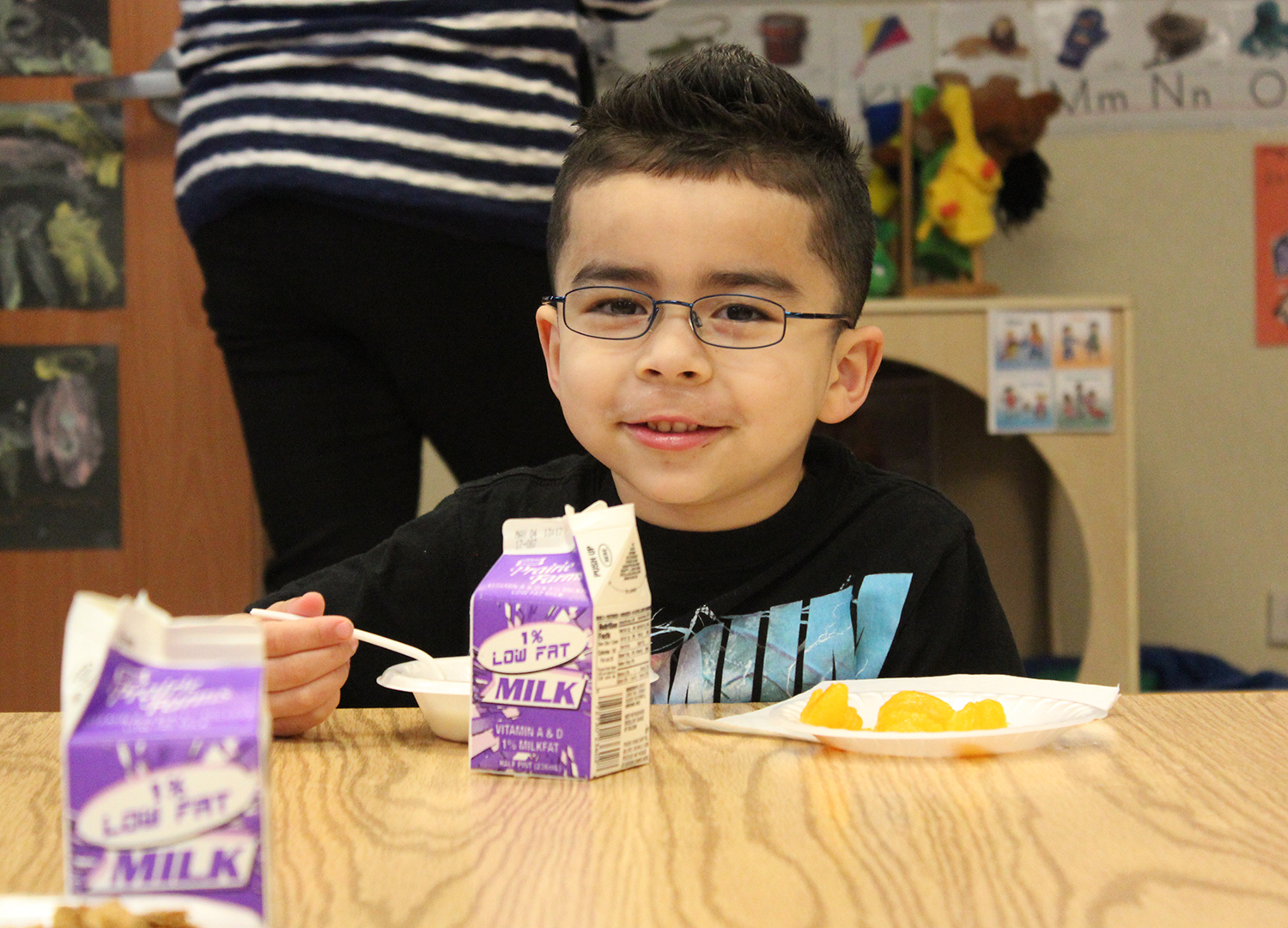
The effective "Breakfast After the Bell" model for school breakfast programs will expand to more than 175,000 additional children in Illinois thanks to a bill that was signed into law today. SB 2393 unanimously passed the Illinois House and Senate this spring.
With one in five children in Illinois at risk of hunger, there is a substantial need for school breakfast. Children who eat breakfast are better able to learn and focus. The state currently ranks 42nd out of the 50 states and the District of Columbia in providing breakfast to children at school.
Thanks to the new law, breakfast will be an official part of the school day in low-income schools, guaranteeing that every student has access to the healthy food they need to learn. Incorporating breakfast into the school day removes barriers that children face, such as transportation challenges and the stigma associated with receiving free and reduced-price meals. The new requirement takes effect on January 1, 2017.
“Illinois children have such incredible potential, but hunger stifles that potential. In
order to grow up healthy and excel in the classroom, children need to eat
breakfast,” said Kate Maehr, co-chair of the Illinois Commission to End Hunger
and CEO of the Greater Chicago Food Depository. “This new law makes breakfast
accessible to more kids in our state and provides them the nourishment they need
to succeed.”
Starting the day with a nutritious breakfast makes a measurable impact on children's ability to learn: for example, kids who eat breakfast score 17% higher on standardized math tests, according to research from Feeding America.
“Monday mornings can be hard for some children, especially if they start the day hungry after a weekend of inconsistent food sources. This new legislation will go a long way in providing a nourishing breakfast for the children of Illinois,” said Tom Browning, co-chair of the Illinois No Kid Hungry Working Group and Director, Childhood Nutrition & Wellness at Illinois Action for Children.
A statewide coalition of organizations advocated for the Breakfast After the Bell legislation, including Bread for the World, COFI, Catholic Charities, Central Illinois Foodbank, Eastern Illinois Foodbank, EverThrive Illinois, Feeding America, Feeding Illinois, the Greater Chicago Food Depository, Heartland Alliance, Hope Response Coalition, Illinois Action for Children, Illinois Hunger Coalition, Illinois Coalition for Immigrant and Refugee Rights, Illinois Migrant Council, Illinois Public Health Institute, Share Our Strength’s No Kid Hungry Campaign, Northern Illinois Food Bank, the Ounce of Prevention, River Bend Foodbank, Sargent Shriver National Center on Poverty Law, St. Louis Area Foodbank , Tri-State Food Bank, Voices for Illinois Children and the YMCA of Metropolitan Chicago.
Friday, August 19, 2016
Tuesday, August 2, 2016
Uniting Fresh Food and Clinical Care: FRESH Truck at Oak Forest Health Center
The latest addition to the partnership between Cook County
Health and Hospitals System (CCHHS) and the Greater Chicago Food Depository is
the FRESH Truck mobile produce distribution at Oak Forest Health Center. On
Thursday morning, patients received food vouchers from their doctors for a
visit to the FRESH Truck. As they walked through the truck, volunteers provided
assistance with selecting a variety of fresh fruits and vegetables, including
melons, celery, potatoes, onions, and cabbage. More than 125 clients took home
produce.
Doctors and patients agree that this nutritious, accessible
food can lead to better health outcomes for people with chronic diseases. Dr. Chukwuemeka
Ezike sees many patients with lifestyle-related conditions like diabetes and
hypertension in his practice at Oak Forest Health Center. “Many of the patients
don’t have the option to find healthy, good quality food,” he says. “The
program will benefit patients not only by giving them better food, but also by
encouraging them to keep their appointments with our clinic.”
As part of the partnership between the Food Depository and
CCHHS, Dr. Ezike and his colleagues now screen their patients for food
insecurity. Most patients have been receptive, he says: many mention related challenges,
such as lack of access to transportation. Bringing the FRESH Truck to a
convenient site like the health center addresses some of these barriers. The
Oak Forest Health Center also informs patients who are food insecure about
nearby food pantries available to them.
![]() |
| Donnel Jones with produce from the FRESH Truck |
One patient, Donnel Jones, walked off the FRESH Truck with
three bags of vegetables. “It came in handy,” he says. He learned about the
FRESH Truck when he received greens and kale from the Oak Forest Health
Center’s community garden recently, along with a voucher for the upcoming FRESH
Truck distribution. “I love cooking – I learned that from my mom,” he recalls.
Donnel would love to include more fresh produce in his diet, but it can be a
challenge to afford these items. His SNAP benefits have been reduced by more
than half, and the $80 in assistance he receives each month doesn’t go far at a
grocery store. Being able to prepare fresh greens and vegetables makes a
substantial difference in his diet.
Dr. John Jay Shannon, CEO of Cook County Health and
Hospitals System, was at Oak Forest to see the FRESH Truck in action. He
anticipates a broader impact for the culture of the health center: “It goes
beyond material clinical care. It gets clinicians thinking about the community
that we serve,” Dr. Shannon said. He notes that “there’s been a marked
suburbanization of poverty.” The partnership between CCHHS and the Food
Depository represents a key opportunity to address food insecurity throughout
the county while educating both patients and their doctors about the impact of
healthy food.
Wednesday, July 6, 2016
Summer meals offer nutrition for kids and teens
![]() |
| Children eat lunch outside the McKinley Library |
Summer can be a challenging time for low-income families who
struggle to afford food and childcare. The Summer Food Service Program ensures
that children still have access to nourishing meals. Since 1968, the USDA has
funded the Summer Food Service Program with a grant to state agencies, who
reimburse community organizations like the Greater Chicago Food Depository to
deliver the meals where they are needed most. This summer, the Food Depository
expects to serve more than 600,000 meals at more than 300 sites.
Lunch Buses travel throughout the city and south suburbs all
summer, transporting meals to easily accessible neighborhood sites every weekday.
Find
the full Lunch Bus route here. Since these meals are only available to
children and teens 18 and under, interns and volunteers also help adults find
food pantries by distributing informational flyers.
Joe has volunteered as a Lunch Bus driver for the past three years. His reason for volunteering is simple: “It makes you feel good.” At the McKinley Library, he works with Christian, a Food Depository AmeriCorps intern, to distribute more than 75 meals in 20 minutes. Children eat their lunches in a small park beside the library, while parents enjoy an opportunity for outdoor time with their kids.
Christian is spending his second summer as an intern on the
Lunch Bus. “Seeing the kids’ faces every day is my favorite part,” he says.
“It’s really humbling.” Christian answers parents’ questions about the program
in English and Spanish and tracks the number of meals served at each site.
From the library, the Lunch Bus proceeds to St. Pancratius
church in Brighton Park. After receiving their lunches, children line up to
receive free age-appropriate books from Bernie’s
Book Bank. By distributing books
alongside the Lunch Bus, Bernie’s Book Bank supports literacy for children in
need. Children express their excitement and gratitude for both the books and
the meals.
Although the Lunch Bus serves thousands of meals, an unmet need remains: only 14 percent of children who receive free and reduced-price meals during the school year utilize summer meals. Families in need of summer meals can find their nearest site by texting FOODIL to 877877, calling 800-359-2163, or visiting summerfeedingillinois.org to locate meal sites.
Thursday, June 23, 2016
Chicago's largest anti-hunger rally takes place June 25th
With summer in full swing, the 31st Annual Hunger
Walk is just around the corner. Here’s what to expect in Jackson Park on the
morning of June 25th.
The Hunger Walk is an annual two-mile walk along the
lakefront. Proceeds benefit the Food Depository’s partner agencies, including
food pantries, soup kitchens, and shelters throughout Cook County. Funds raised
during Hunger Walk support these agencies’ operations throughout the year,
ensuring that they can provide nutritious food to children, families, and
individuals in need.
For some agencies, the funds raised at Hunger Walk cover all
their operating expenses for the entire year. One such agency is featured at
the beginning of the short video above, illustrating why a few individuals plan to
participate in Hunger Walk. “It’s not only food, but also our equipment for our
pantry we’re able to purchase with the funds from Hunger Walk,” says Marva
Hines-Brown, who coordinates the food pantry at Covenant United Church of
Christ in the southern suburb of South Holland.
Live entertainment from local performers enlivens the Hunger
Walk. From the inspirational R&B of fourteen-year-old Lyr!c to the house
and dance music of Jameisha Trice and Dana Devine, the morning’s performers
will offer a variety of upbeat sounds to kick off the day. Additional
performers include T Star and the Evanston School of Rock House Band.
A children’s tent provides activities for the youngest
Hunger Walk participants, including face painting. Participants are welcome to
continue the fun with barbecues and picnics in the park: a designated grilling
area will be available along the course. Sponsor tents will also be present,
offering giveaways and information from the Hunger Walk’s premier sponsors:
ABC7 Chicago, ConAgra Foods, Griffith Foods, Jewel-Osco, Kraft Heinz Company,
and Tyson Foods.
Registration for Hunger Walk opens at 7 a.m., with the walk
starting at 8:30 a.m. Join us at Chicago’s largest anti-hunger rally, or make a
contribution to support a participating team. Learn more at chicagosfoodbank.org/hungerwalk.
Monday, June 13, 2016
Record high audit score demonstrates a commitment to food safety
![]() |
| The Food Depository's warehouse meets stringent standards for food safety. |
“We strive to be leaders in food safety, excelling beyond the status quo,” says Michael Goss, Manager of Food Safety. While the Food Depository has consistently scored above 98% on this assessment, this year set a new record. The Food Depository achieved a score of 99.1% on the food safety audit, its highest score ever.
This year, the audit requirements were significantly revised, increasing the challenge for the Food Depository team. In a short amount of time, they conducted a hazard analysis, reviewing every process in the warehouse and documenting how they control and eliminate all hazards. Some of the crucial programs that are used to control hazards include employee training, warehouse best practices, temperature control, and vendor approval procedures.
Preparation for the food safety audit involved a coordinated effort for staff. With over 200,000 square feet of warehouse space, the Food Depository facility contains an ever-changing variety of shelf-stable and fresh food. Both the facility and documentation are covered in the audit, which comprises a 470-point evaluation. Every element of the operation, from equipment to sanitation to pest control and more, is included in the audit.
According to Michael Goss, the outstanding success on the food safety audit goes beyond a checklist of best practices: it’s part of the culture. “Food safety culture really became the focus,” he says. “There was a lot of ongoing training and support. The entire organization really embraced the culture and it made a difference. Everybody really cares and works as a team.”
Sheila Creghin, Vice President of Operations, agrees that the team’s united effort made the difference: “The audit results represent the dedicated commitment of our great team day in and day out to ensure the food we distribute to our partner agencies in our community is safe for the clients we serve.”
Congratulations to the Food Depository team on ensuring safe and wholesome food for the community!
Wednesday, June 1, 2016
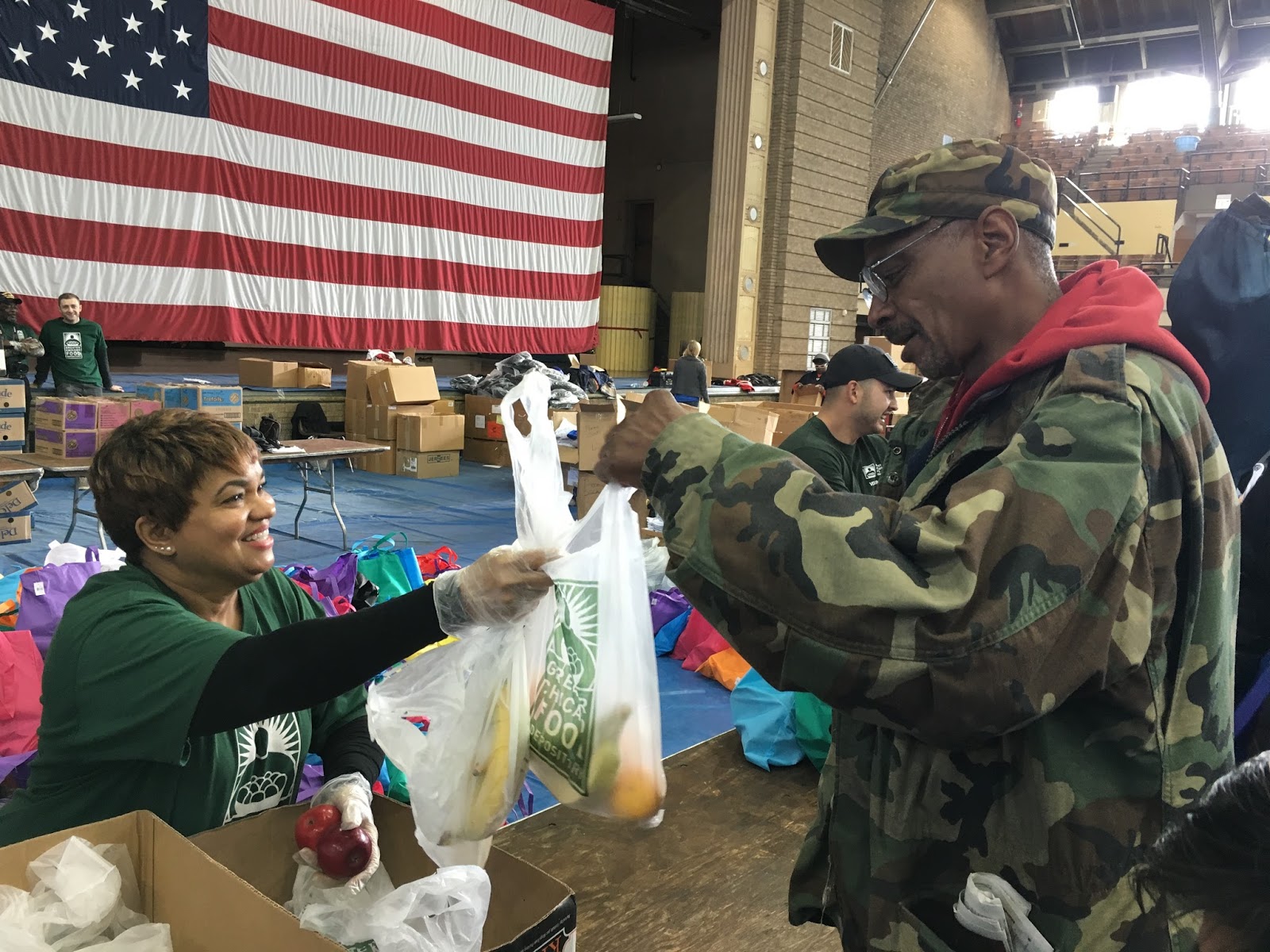
Food Depository to participate in veteran Stand Down, honors those who served
From June
10-11, the Greater Chicago Food Depository will be participating in the Veteran
Stand Down at General Jones Armory. The event provides homeless veterans with
food, clothing, shelter, medical services, and other assistance. The veterans will
receive a hot meal prepared by Chicago’s Community Kitchens – the Food
Depository’s 14-week food service job-training program. The Food Depository
will also provide bags of food to take with them as they leave.
The most
recent Stand Down in November provided hot meals for 800 veterans and
volunteers and distributed over 6,900 pounds of food. Each of the 609 veterans
that attended received bags of shelf stable food and fresh produce. The Food
Depository expects to serve 750 veterans at this summer’s Stand Down.
The need among
veterans in Cook County is significant. Over 16,000 veterans in our community
live at or below the poverty line, and 18% of households that turn to the Food
Depository’s network for assistance include at least one person who has served
or is currently serving in the Armed Forces. In addition to the Stand Downs, the
Food Depository operates food pantries at two VA facilities, the Jesse Brown VA
Medical Center and the Edward Hines, Jr. VA Hospital. These food pantries
distribute food to over 3,000 veterans in need each month. The Food Depository
also provides SNAP application assistance to veterans.
To learn more about the Food Depository’s response to hunger among veterans, visit chicagosfoodbank.org/veterans.
Friday, May 27, 2016
Chicagoland businesses raise more than $82,000 to combat summertime hunger
The Greater Chicago Food Depository’s second annual
LunchTime to End Hunger campaign, which ran from May 16-20, raised $82,763 in support of the organization's summer feeding initiatives for children. Thirty-one
companies participated as teams in this year’s competition. The top three fundraisers were Honigman
Miller Schwartz and Cohn LLP ($12,575 raised), Levenfeld Pearlstein, LLC
($10,400 raised), and Guggenheim Partners ($9,130 raised).
The Food Depository congratulates the top teams, and thanks each of the businesses that participated in this year’s competition. Every team made a tremendous impact, with an average of $2,500 raised per team. Many businesses found creative ways to fundraise, including bake-offs, internal fundraising competitions, and hosting luncheons.
The LunchTime to End Hunger campaign encouraged participants to donate what they would normally spend on lunch for a week to the Food Depository. Funds raised will provide the equivalent of more than 276,000 meals for children this summer. This support makes an incredible impact as the Food Depository serves 812,000 clients each year, or 1 in 6 Cook County residents.
To learn more about the campaign, visit chicagosfoodbank.org/lunch.
Subscribe to:
Posts (Atom)